EDDIE
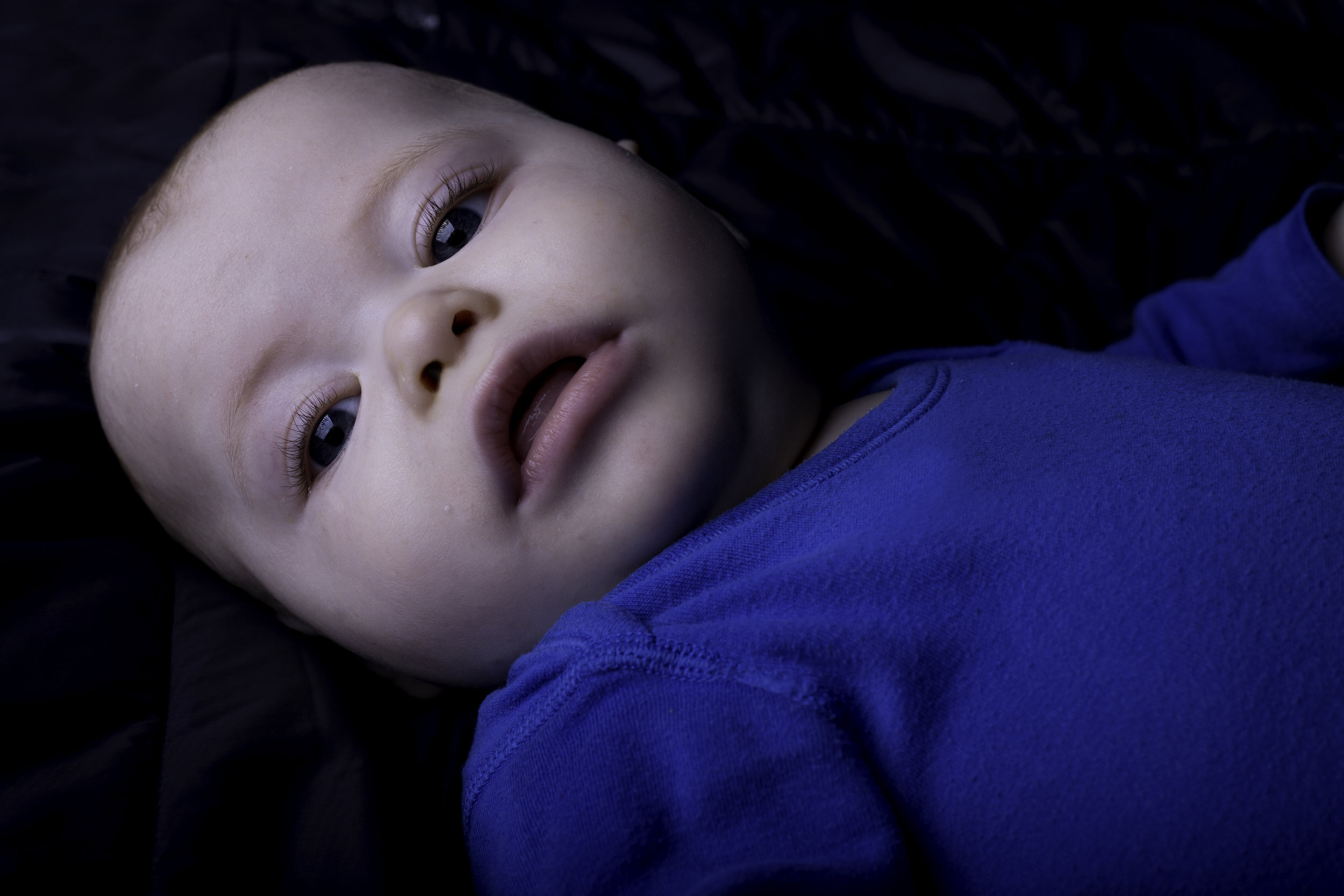
“Eddie’s favourite things are bouncing in his chair, being naked and being in the bath – he makes lovely happy sounds and smiles the most at these times. He has also recently discovered food and loves it!”
Eddie (Edward) is almost 8 months old. He is a beautiful baby and, until recently, a happy one.
A large porencephalic cyst was found on the left side of Eddie’s brain in utero at 35 weeks gestation. The initial diagnosis was Porencephaly, a rare neurological disorder, which can cause a wide range of minor to severe neurological problems. In a short span of months, Eddie has been diagnosed with Cortical Vision Impairment, Right Hemiplegia and, most recently, Infantile Spasms (also known as West Syndrome). He also has Silent reflux and Cow’s milk protein allergy (CMPA). Although the latter are both fairly common in babies, we now believe these conditions were significant factors in Eddie being an unsettled and unhappy baby in the early months of his life.
We spoke to Eddie’s parents about their experiences of his rare disease.
“Eddie was very unsettled from about 2 months old until around 5 months - he was often inconsolable for hours at a time at home. We worried that it was ‘something’ to do with the neurological damage caused and actually it seems to have been so much simpler than that. Changing our diet to dairy free and starting to wean him onto solids changed everything. We enjoyed two months of Eddie being so much happier and developing well, but the start of the infant spasms changed everything. Until then I’d say that his condition had not really affected him as a baby, because he is loved, fed and safe - everything a ‘tiny’ baby needs. Although he is not a ‘tiny baby’ anymore, at nearly 8 months, his developmental delay and lack of working vision means he is not really engaging with the world around him, but I don’t think he is affected by it at this point.”
“At each appointment where something new is diagnosed we feel scared and crushed. But we go home and Eddie sustains us.”
“We get a new referral (Sensory Team, Physio etc), I join a new online forum, buy a book, and try to learn. We build ourselves up again and feel happy and tell ourselves that he will be fine. Then something changes and so it goes, up and down. It’s all quite raw at the moment as the seizures only started two weeks ago today. With West Syndrome, it is important to stop the seizures as quickly as possible, but the first line of treatment has not worked. From Thursday on, he will be put on a high dose of steroids which is upsetting, because he will likely be very unhappy, but mostly because he will become immunosuppressed – creating similar effects to chemotherapy. The hardest part for us both is living with the not knowing, with the up and down. We go from believing he will be fine to worrying he will never walk or talk, often in the same moment. The easiest part is Eddie, because having him here and holding him make everything feel better.”
“We chose to take part in the Rare Project, because Eddie looks so well - even close friends have trouble understanding that things are likely to be hard for Eddie. Until the infantile spasms are under control, he won’t develop - indeed he has regressed a little bit. Likewise, although his teacher for the visually impaired feels he has good potential to learn how to see, the spasms are hindering that currently. We still hope that he will go on to thrive and do well, but it is important to us as a family that people understand that ‘hidden’ neurological conditions can have far reaching impacts.”
“The effects it has on us are more complicated. It took us a long time to get pregnant with Eddie and we were over the moon. My pregnancy was wonderful until 34 weeks in when I was diagnosed with polyhydramnios. I’d had that with my older son so I was not too concerned. However, the resulting growth scan found the cyst. I still can’t really bear to think about those first few hours, days or weeks really - we were just so sad and scared. No one could tell us what Eddie’s overall prognosis would be, we just had to wait and see.”
“He was born by c-section and was utterly perfect. ”
“He did everything he was supposed to do - he cried, he fed, he slept and had a poo! We were told to bring him home and just enjoy him and that he’d have an MRI in 3 months’ time. I’ll admit as well as being wonderful, those early months were hard; I’d nuzzle his beautiful head and wonder what had gone on in there. And I felt guilty too. Although we don’t know what caused Eddie’s cerebral infarction, I feel responsible - I didn’t keep him safe in there. As the MRI neared, we got very anxious and sadly the MRI showed more damage than we’d seen on the MRI in utero, so that was a huge blow. It’s been that way ever since - an emotional rollercoaster.”

FIND OUT MORE
West Syndrome
West Syndrome is a constellation of symptoms characterized by epileptic/infantile spasms, abnormal brain wave patterns called hypsarrhythmia and developmental regression. The occurring spasms may range from violent jackknife or "salaam" movements where the whole body bends in half to no more than a mild twitching of the shoulder or eyes. These spasms usually begin in the early months after birth and can sometimes be helped with medication.
To learn more about Wests Syndrome, click here.
Source: https://rarediseases.org/rare-diseases/west-syndrome/
Porencephaly
Porencephaly is a rare condition that affects the central nervous system. People with porencephaly develop fluid-filled cysts or cavities in the brain either before or shortly after birth. The severity of the condition and the associated signs and symptoms vary significantly based on the size, location, and number of cysts. Common features include developmental delay, reduced muscle tone (hypotonia), seizures, macrocephaly (unusually large head size), spastic hemiplegia, speech problems, protracted growth, and intellectual disability. Porencephaly is usually the result of damage from infection or stroke after birth. In these cases, the condition occurs sporadically in people with no previous family history of the condition.
To learn more about Porencephaly, click here.
Source: https://rarediseases.info.nih.gov/diseases/7430/porencephaly
HemiHelp
The charity ‘Contact’ has continued the work of the UK charity HemiHelp, which was a singular charity providing support and information to people with hemiplegia and their families in the UK. HemiHelp is now part of ‘Contact’ family. To learn more about Hemiplegia and how ‘Contact’ can help support you with your ongoing or recent diagnosis, click here.
Don't forget to visit and 'Like' our Facebook page too so we can keep you up to date with our new rare stories by clicking here