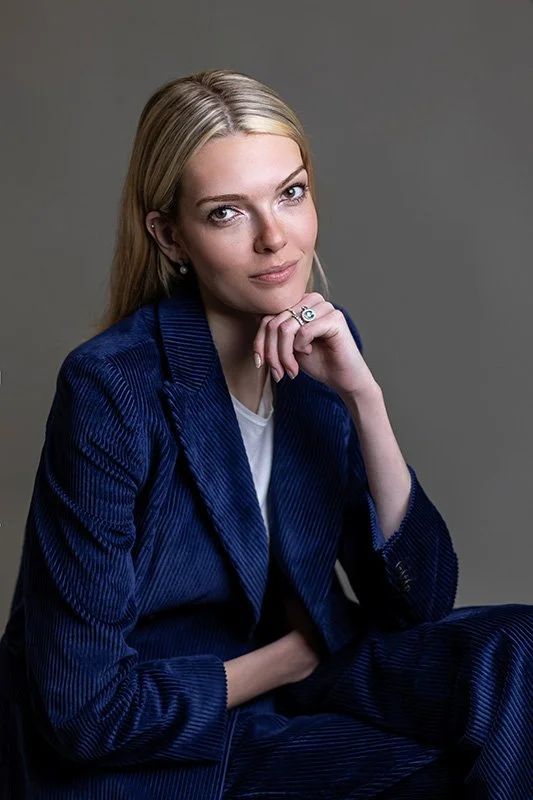
All images courtesy of Celia Chartres-Aris
“I think it's human psychology to try and find comfort, comfort in a very uncomfortable thing, which is human morbidity and understanding our own mortality.”
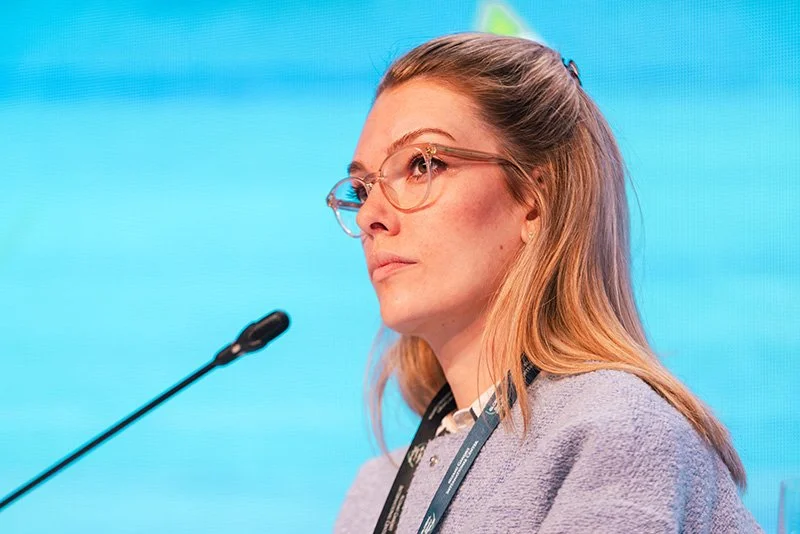
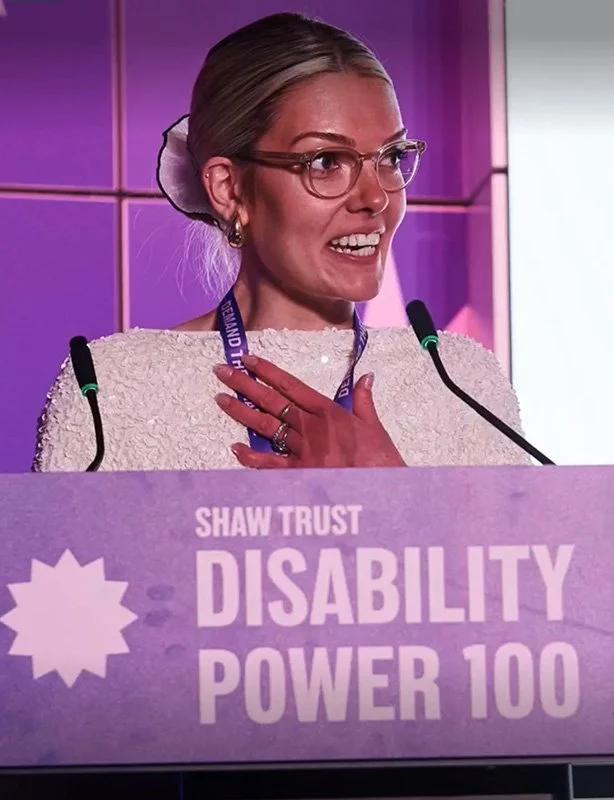
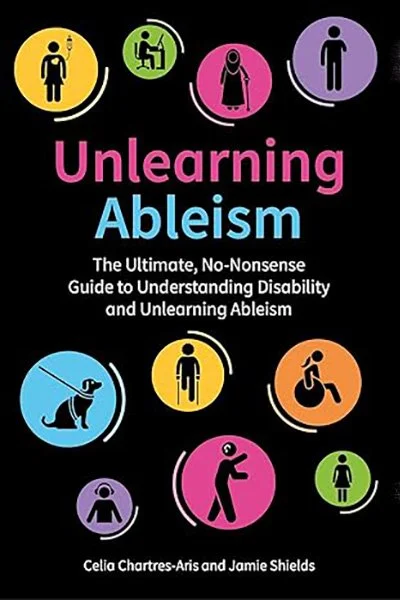
When I first met Celia Chartres-Aris her warmth shone through, and once she took to the stage to begin her keynote speech her quiet confidence and power was clearly evident as she shared her own lived experiences to reflect on the importance of the authentic visual representation of Disabled people within society. There is no doubt that her work as a multi-award-winning government special advisor, campaigner, lobbyist, researcher, and legal and policy expert dedicated to advancing Disability equity and human rights speaks volumes about her. Over the years her achievements have been widely recognised; including being named the Most Influential Disabled Person in the UK 2024, being on the Global Diversity Leaders list, being selected as a Global Future Young Leaders Scholar UK Delegate, being recognised as one of the leading voices shaping Disability law and policy in the UK today, and most recently being appointed a Queen Elizabeth Commonwealth Young Leader in 2026. She has also co-founded a think tank and a training consultancy dedicated to transforming societal exclusion into meaningful disability inclusion. And, in late 2025 her groundbreaking, co-authored book Unlearning Ableism was published.
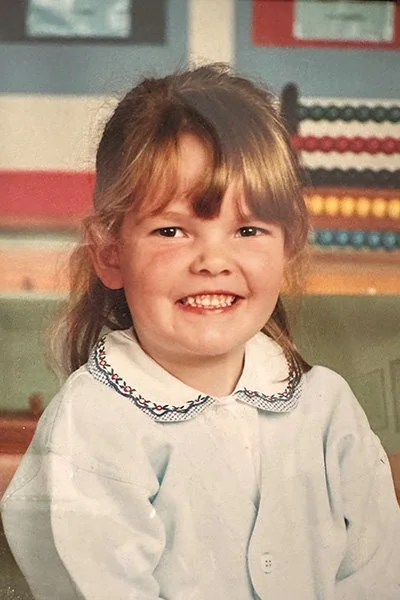
We catch up on zoom several months later, and once again her warmth and strength are evident throughout our engaging and wide ranging conversation. Celia recounts that from a very young age she was often described as ‘the sick kid,’ the one who was often ill, and was always getting injured at school and breaking various bones. “From a very young age I was exhibiting many symptoms of Marfan syndrome, which my dad also has, and so I was diagnosed when I was very small.” However, as she reached her teens her health began to deteriorate more significantly, and it became clear that there was more going on then was currently understood. A scribbled note made by a nurse during her father’s cardiac treatment at a specialist centre in London ultimately provided the answer, when his main medical team back at home in Southampton spotted the term ‘Loeys-Dietz syndrome’ jotted on his paperwork and decided to investigate further.
“They sent him off for testing, he was in the first cohort of people in the UK that were tested and his tests proved to be positive. They explained that he did not have Marfan syndrome after all, but Loeys-Dietz syndrome, which is very similar, but much more complex. They also advised that they wanted to test me, because I was mirroring so many of the issues that he’d had. My test was also positive, and it was almost from the point of my diagnosis that everything just started to go completely wrong, which was very much like what happened to my father. From around the age of 17 years everything just went off a cliff; my blood started shutting down, my spleen shut down, everything was slowly failing.” Celia goes on to describe how many people with both Marfan syndrome and Loeys-Dietz syndrome are very tall, and that it is often during their adolescence when periods of rapid growth places additional strain on both the body and organs that things can become very, very serious indeed.
This rapid decline changed things for Celia, although it wasn’t the first time that she had had to come to terms with a situation in which her physical health determined, and restricted, her opportunities to try to achieve her dreams. She recalls ruefully how as a child, she’d “wanted to be an Olympian. I was sporty and I loved to row, so I told my parents that I was ‘going to the Olympics, and I'm going to be a rower.’ But my body just kept saying no, no, no.” As a teenager she decided that she was going to work within the field of human rights law; “I had really big dreams around travelling the world, going to refugee camps, and looking at issues such as equity to healthcare. I used to say to my mum that I was going to work for the United Nations or Médecins Sans Frontières.” But the reality of her health and disabilities once again her impacted upon her hopes and aspirations, and so she turned her focus towards domestic law instead.
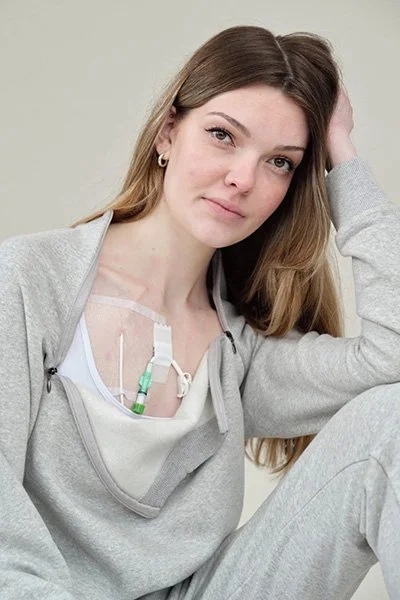
“During university, my condition became life-threatening. My gastrointestinal system just started shutting down. It started in my stomach, and then it spread to my jejunum, and it's now spread through my intestinal tract. Initially I needed a nasojejunal (NJ) feeding tube, then a nasogastric feeding tube and now I'm completely dependent on Total parenteral nutrition (TPN) - a method of providing complete nutrition intravenously for patients who cannot use their gastrointestinal tract. I’ve just passed my fifth-year anniversary of having had nothing to eat or drink.” Despite her worsening health Celia graduated from university. But instead of starting the dream job that she had worked so hard towards, the job offer was retracted once they learnt of her Disabilities. She was ultimately forced to move back home, where she was bedridden for the best part of a year whilst she fought to regain her health and independence.
“When I was coming out of that difficult period of being largely isolated at home, I found my tribe online. I didn't have any Disabled friends growing up, but when I met all these incredible people, I gradually built a global network of brilliant friends. People who I can ring up and who understand. People who taught me about understanding my own internalised ableism, who made me reflect on the way I felt about myself. Things really began to change when I met all these incredible people doing incredible things, and I began to think that ‘actually maybe I can do something to contribute still.’” In the months that followed it became clear to Celia that finding another job would be difficult. She explains, “How I came to do what I do now happened almost without choice, because I couldn't find a role in the legal sector that would work for me. Finding something that I could ‘keep up with,’ was hard. I was fully qualified, I ticked every box except that one box that shouldn't even be a box, my health, and the reasonable adjustments I needed. I realised that I was going to have to do it on my own. I trained in human rights law, it was what I always knew I wanted to do, and after my own experiences I knew that I wanted to work in legislation, and the laws that relate to my life and experiences of Disability.”
Today, Celia has been both recognised and celebrated for the significant contributions she has made over the years. Though she is quick to demur when this is mentioned, noting that “so much of where I am now has got absolutely bugger all to do with me, and everything to do with the people I've met. The people who built me up, and who gave me confidence to take up space, their support and belief in me was massive, because I genuinely didn't feel like I deserved any space for a very long time.” That her many professional achievements have all been balanced against her precarious health makes them not more important, but certainly more meaningful. Strength and inspiration are words used all too often when talking about Disability, and ones which do not sit comfortably with many people, including Celia.
“I can't stand when people call me strong, because I think strength comes from a choice that you made to be in a situation. I didn't have a choice. It was it was live or die. That's not strength to me because I didn't choose it. It's bloody resilience. I'm not offended when anyone calls me strong, but I didn't earn that badge just because I survived. Surely strength is so much more than that. The strength part is the fact that not only did I survive, but then I did something with that survival. That I learned to thrive as well as survive. That's my strength.”
It is important to note that when Celia talks about having survived, it is meant quite literally. Over the years she has come close to dying on several occasions, a fact that many people find difficult to comprehend, and hugely uncomfortable to contemplate. “Five years ago, I very, very nearly lost my life. I basically went into full ketosis, and that did a lot of damage because my body started consuming my own organs because it needed an energy source. I'm in a very precarious position now, where what can be managed is being managed, like my heart and my spleen. But, if I were to stop my blood infusions for three days I’d be in intensive care. I'm really living on a very, very fine edge. People find that quite shocking when they meet me, or when they're speaking to me, and often comment that ‘you don’t look like you're that poorly.’ I don’t think there is any way that somebody with a life threatening condition should necessarily look like, or how they should behave, but for the general populace who don't encounter people with very severe health conditions, they are very, very surprised how close to that line I live every day.”
Describing how she has to carefully manage her condition with intensive, regular medical interventions alongside her daily treatments she explains that the constraints this brings can feel suffocating at times, so finding ways to simply be has been incredibly important to her mental health. “I’m an avid sailor, and I live on the water. I can no longer go into the water because I've got so many tubes in my body, but as long as I'm on the water I'm fine. I feel quite claustrophobic at times because I have to be so controlled over my life, and over my body. But when I'm on the water, and I can't see the horizon and I can't see other people, and all I can hear is the sounds of the water it offers me that switch off, the escapism I need.” The need and deep love of water is one Celia shares with her husband, along with a passion for politics and a good debate. She notes wryly that she is asked, most frequently in hospital settings, about ‘how she managed to get married.’ The assumption, often unspoken, is that finding someone who can ‘cope with’ her life limiting condition is surprising. Given that she had had to work on recognising and reframing her own internal ablism, she might be able to understand why this question is asked, though this does not make it less problematic.
“I get asked all the time by people ‘how did you find someone that could cope with it?’ I have lost a lot of people in my life because of my health, because it is too difficult. I don’t hold it against them, maybe I should, but I understand when people want to walk away.”
“Because I understand why, I understand that this is difficult, and I understand that this isn't the life that you thought you were going to have. I have been in relationships where it's felt a little bit like being a patient and a carer, and I can't stand that. Because I'm a partner and I need a partner, not a carer. I don't need someone tell me everything's going to be okay, because I know it's not. I don't want that. I don't want someone to lie to me, or to pity me for the rest of my life. I want someone that will stand on the top of the hill with me, and if they need to will give me a little push then they will, knowing that that's what I need.”
When you have grown up thinking that your illness is a burden, it can be hard to change the internal narrative. “It is a learning curve to realise that you're not a problem. As a child, I was terrified of that because even from a young age I worried that I didn’t look like everybody else, and my body didn’t work the way everybody else’s did. Truly believing that you're not a burden, and you're not a responsibility that somebody has to take is hard.” Despite death being a very real fact of life, it remains a topic which most off us find difficult to think about. But for Celia, and for her family, and all those she loves, it is something which they have had to learn how to navigate, to talk openly and honestly about, to think about, and to allow and hold space for.
“People want to distance themselves from thinking about dying because it's not a comfortable conversation to have, but I'm very comfortable with it because it is my reality. We prefer to imagine that it's going to be really obvious if someone is terminally ill, and it's not always. And, if I am standing in front of you it is a very real reminder of what can happen to you, what can happen to your loved ones. For a lot of people who are in critical care or have a very complex ongoing condition it's sometimes easy to forget that this is not normality for most people, because it becomes so normal for you. For them my lived reality can be so scary, but for me it’s just my Tuesday morning. It is very scary for people when that normality breaks, and I don't think that's something that we can forget. Not talking about death, and not thinking about dying is above all a self-protection mechanism, and distancing ourselves from it is a way to find comfort in the uncomfortable. I think it's human psychology to try and find some comfort in a very uncomfortable thing, which is human morbidity and the understanding of our own mortality.”

FIND OUT MORE
About Rarity Life:
Rarity Life is an online publication that offers those affected by rare disease, disability and cancer the opportunity to create content that is truly inclusive, to unify our collective experience and to celebrate and share our differences.
To read the latest edition and all previous releases of Rarity Life click here.
About Loeys-Dietz syndrome:
Loeys-Dietz syndrome (LDS) was discovered by Drs. Loeys and Dietz in 2005, the syndrome shares some similarities with Marfan syndrome and Ehlers-Danlos syndrome, but their research identified and confirmed the unique features that help distinguish it from other conditions.
LDS is a rare autosomal dominant genetic connective tissue disorder which increases the risk of arterial aneurysms, aortic dissections, and distinctive craniofacial and skeletal features. It is caused by mutations in genes involved in the TGF-β signalling pathway. As such it can affect multiple systems, and the way in which the disease impacts each individual will be variable, but will likely include changes in the heart, blood vessels, bones, joints, skin, and internal organs.
The Loeys-Dietz Syndrome Foundation is a division of The Marfan Foundation, to find out more about the syndrome and the foundation visit them here.
A note on the word Disabled:
Currently both a capital and a lowercase are used for the word Disabled, largely depending on the writer. Generally speaking adjectives are written in lower case unless they are proper nouns or adjectives that modify nouns. However using a capital D signifies that the writer is recognising that it is society that create barriers, which reflects the social model of Disability. The capital D also shows that Disabled people have a shared identity and are part of a community that continues to fight for equal rights and access.
GOV.UK guide:
Inclusive language: words to use and avoid when writing about disability - GOV.UK
About Celia’s work:
Celia’s co-authored book, Unlearning Ableism: The Ultimate, No-Nonsense Guide to Understanding Disability and Unlearning Ableism by Jamie Shields & Celia Chartres-Aris was published in November 2025, and is available from all good booksellers, or direct from the publisher, linked here:
www.uk.jkp.com/products/unlearning-ableism
Website: www.disabledbysociety.com