

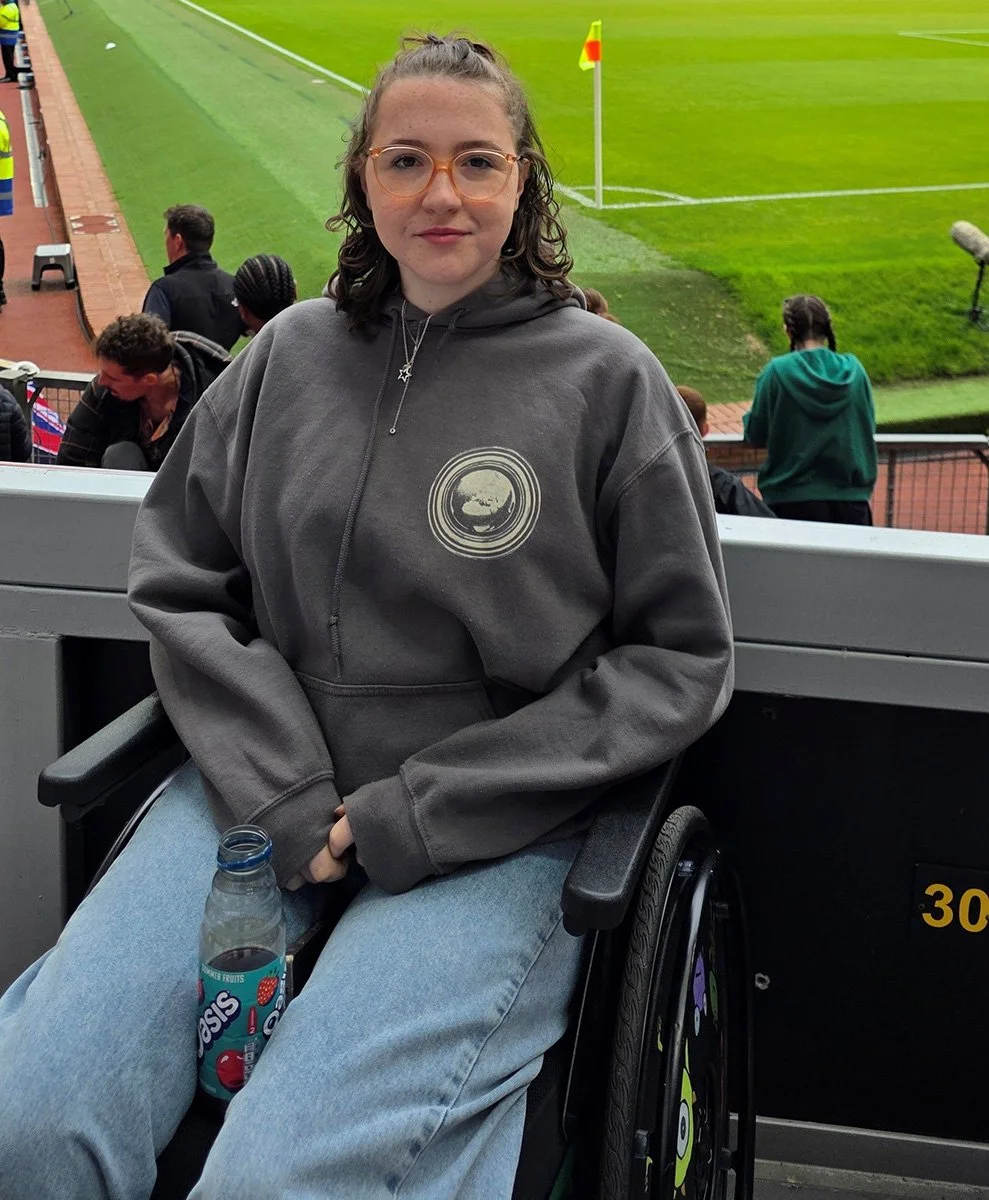
Keisha at Soccer Aid.
“We are kind of at the point where we can't not do things, just in case, now it's more a case of taking it a day at a time, because you only live once”
When the video connects for our call Keisha is snuggled in bed next to her mum Laura. Like most teens she has slept in, but for her it is more important than most, as she is still recovering from a hugely difficult few years. Keisha is seventeen years old, and lives at home along with her younger sister Lili-Mai, who is almost fifteen, her mum and dad and her dogs. They are a close knit family, who have loved and supported each other through some difficult times.
In December 2023, having been diagnosed with a rare immune condition called T-cell deficiency, Keisha needed a bone marrow transplant. She was transferred from Liverpool's Alder Hey Children's Hospital, to the Great North Children's Hospital in Newcastle where she would spend the next six months as an in-patient, with her mum by her side. Hours away from her home in Flint, but, as is often the case with rare conditions this is not really where her story started.
“She had chicken pox when she was three, which was really bad and she ended up hospitalised and suffering with pneumonia. Then she just had every single childhood illness you can think of, they were always ten times worse than expected. She also had loads of ENT issues; constant ear infections, sinus infections, chest infections etc.” Laura explained.
But it was when Keisha was eight or nine years old and developed a growth on one of her feet, known as a granuloma, that things really began to change. It was also, arguably, the first time it perhaps ought to have been “picked up that maybe there was something more going on with her health.” Four years later a second growth appeared on her other foot, and this time it ulcerated leaving a hole which reached to the bone. “That's when things started to be taken more seriously, and doctors began to question what was actually going on. We were sent to Glan Clwyd Hospital, they referred us to Gobowen Hospital (The Robert Jones and Agnes Hunt Orthopaedic Hospital) who in turn transferred us to Alder Hey. We were seen by dermatology, then rheumatology, and finally immunology in the 'April of 2023” says Laura.
It was during a follow-up appointment to discuss their findings at Alder Hey that a bone marrow transplant was first mentioned, but that this would need to be done in Newcastle. By the time Keisha saw the team of specialists there it was August, and the detailed tests that they’d done as part of their assessment process had found that she had a problem with her lungs. Keisha explains “I’d been told I had asthma for the last ten years, we even went to our local hospital three months beforehand because I was struggling but they said it was just mild asthma and allergies.” But in fact she was found to have a lung function of 47%, and was diagnosed with bronchiectasis, which is similar to cystic fibrosis. Devastatingly this not only meant that she was not well enough to have the bone marrow transplant; it also meant she needed urgent treatment. Laura continues, “her lungs were just full of fluid, and it was full on panic stations from the doctors then, because she was not well enough to have a bone marrow transplant, but as they explained if she didn’t have a bone marrow transplant then everything's going to get worse. Her lungs were going to get worse, and she would keep getting infections.”
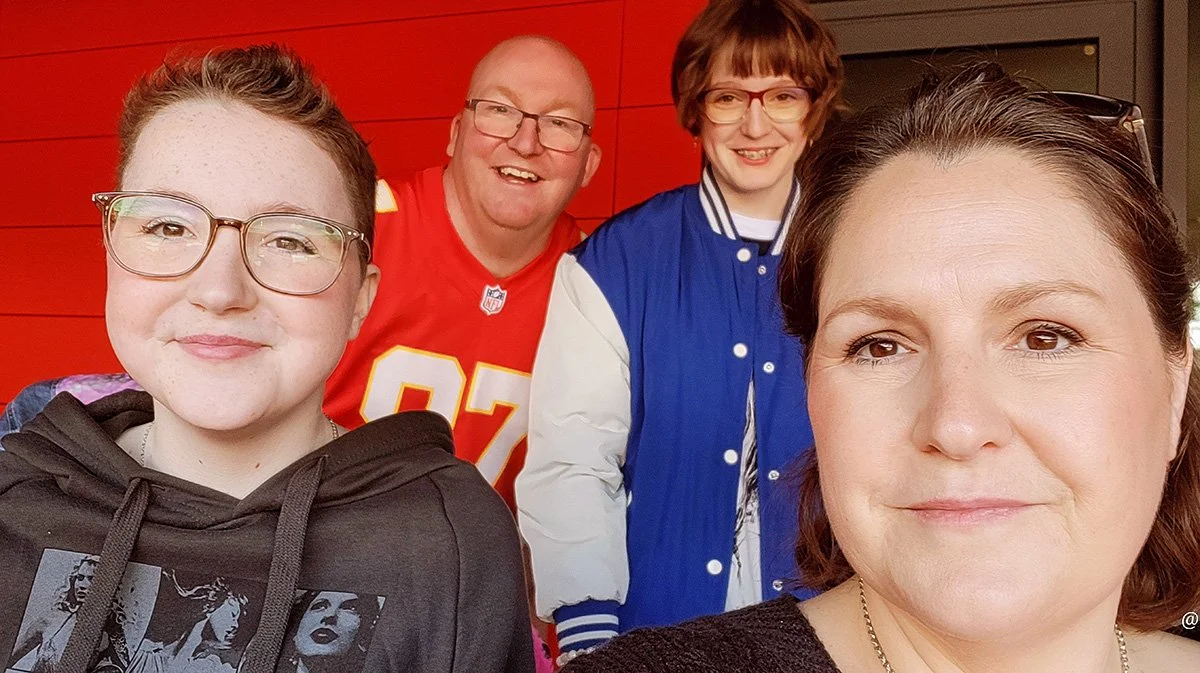
Keisha with her family at a Taylor Swift concert. All photographs courtesy of Keisha & Laura
A week later Keisha was admitted for treatment, where further tests found that she had pneumococcal infections, which are caused by the Streptococcus pneumoniae bacteria, in her face and in the sinuses. They also discovered that she had Epstein-Barr virus as well. By this time it was early September, and she was incredibly poorly, and Laura recalls how a few doctors seemed shocked, explaining that they hadn’t realised how bad it was and that she should have been seen earlier. This confirmed to the family that the link between all of Keisha’s different issues had been missed for years between all the hospitals, with no one seeing the broader picture.
In November a stem cell transplant donor was found by the Anthony Nolan Trust, and because of her ongoing poor lung function, as well as the various viruses her body was still fighting she needed to be admitted for a month prior to the transplant for treatments, which included intensive chemotherapy. Keisha had to spend not only Christmas but also her sixteenth birthday in hospital, including a month spent in isolation. This time, which would be incredibly hard on anyone, was made a little easier for Keisha through the support of the Bubble Foundation, a local charity which supports children with life-threatening immune conditions whilst on the ward at the Great North Children’s Hospital. Her family too received invaluable support from the Sick Children's Trust, which supports families to stay together when they have a seriously ill child in hospital by providing them with a ‘home from home.’
Unfortunately, Laura explains, “Keisha had lots of complications from both the transplant and from the chemo. She developed something called gastroparesis, which is basically where the stomach stops working. She was constantly vomiting, in chronic pain and suffering from constant fatigue. At her worst she couldn’t get out of bed for around six weeks, and slept most of the day, she barely ate and eventually needed to be fed via a TPN (TPN refers to total parenteral nutrition, which is an alternative way of providing a patient with nutrition when the gut does not work or is inaccessible).” So, instead of revising for her GCSEs, and planning her dress for prom Keisha found herself living hundreds of miles away from her family, friends and really her own life. This was incredibly hard on her, but she found comfort in music, in books, and in films.
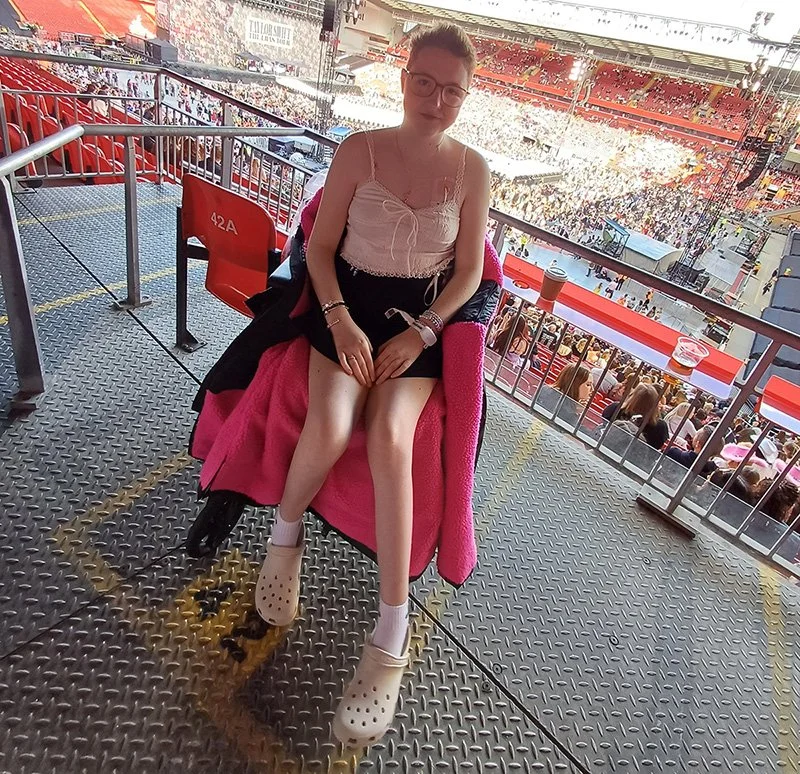
Keisha enjoying the atmosphere at a Taylor Swift concert
It was her love of music which held the key to getting her to eat again. They explain that when you don’t eat orally for a long time it is really hard to readjust to it, and to eat enough to provide enough nutrition. But the team at the hospital agreed with Keisha that if she got to the point where she was able to eat enough to stop the TPN they would let her leave the hospital to go to Anfield for Taylor Swift's Eras tour concert that they’d booked long before her health deteriorated. Laura laughs, teasing Keisha that going to the concert was ‘the only thing that that got you eating again.’ Keisha nods, noting that “getting to see Taylor Swift after everything I’d been through felt like a dream. I knew I still had a lot of challenges ahead, but just being able to leave hospital, to be with my whole family, and to just do something so normal but also so special made such a difference.” The Sunday after the Taylor Swift concert Laura was able to watch her daughter eat a home-cooked roast that she’d made in the kitchen at Crawford House, a moment that will never leave her.
Keisha was eventually able to come home in the summer of 2024, and a year later the family are still in the early days of rebuilding after such a long and difficult time. Keisha still has a range of challenges to face, including coming to terms with her loss of mobility, which is due to axonal neuropathy, and the prospect of surgeries on her lower limbs to try to improve their function. She is still immunocompromised, having undergone the bone marrow transplant she will need to wait until she has recompleted all of the routine childhood immunisations before she will no longer be classed as being ‘at risk.’ But, beyond these challenges her overall prognosis is hopeful, as the bone marrow transplant was deemed a success. Laura explains that “for now she still has monthly blood tests so that they can monitor everything, and we're still in the early stages but the hope is that her T-cell deficiency is cured as she's now got healthy T-cells that are working.”


Keisha is gearing up to start college in September. Until then, she spends her time immersed in books, films, and dreaming up her next adventures. Over the past year, she’s attended some unforgettable events, and her enthusiasm is infectious as she looks ahead to more concerts with her favourite artist. Laura reflects on their approach: “When you’re in wheelchair seats, you’re not fully in the crowd, there’s a bit of space, so you’re not getting breathed on or coughed over! So we figured, as long as we’re sensible with the basics, we’ve reached a point where we can’t keep avoiding things ‘just in case.’ Now it’s more about taking each day as it comes because you only live once.”

FIND OUT MORE
About Rarity Life:
Rarity Life is an online publication that offers those affected by rare disease, disability and cancer the opportunity to create content that is truly inclusive, to unify our collective experience and to celebrate and share our differences.
To read the latest edition and all previous releases of Rarity Life click here.
About T cell deficiency:
T cell immunodeficiency is a rare immune condition which can both present as one of a number of different primary disorders, or it can develop as a secondary outcome of chronic infection, illness or at times drug therapy.
T cell deficiency is a deficiency of the T cells, and it is caused by a decreased function of the individual T cells. As the T cells’ main function is to help with the human body's immunity a deficiency can cause an immunodeficiency in the individual.
The occurrence of a primary T cell disorder is rare, and would generally be present in infancy or early childhood. In these cases an early diagnosis is hugely important, as it is likely that the individual will need a bone marrow transplant before, or to mitigate, the onset of a severe infection or other complications. The presentation can vary, but often the T cell insufficiency will manifest as unusually severe common viral infections, diarrhoea, and eczema rashes.
About axonal neuropathy:
Axonal neuropathy is described as a complex disorder of the peripheral nervous system, which is typically characterised by damage to the axons (part of the nerve cells). Common causes include autoimmune conditions, and the symptoms often include motor and sensory losses and/or disturbances, starting in the limbs.
About Granulomas:
A granuloma is a cluster of immune cells that forms in response to an infection, inflammation, or foreign substances in the body. They typically present as new lumps on the skin, or within the body, and are generally not cancerous.
Sick Children's Trust:
To find out more about the Sick Children's Trust you can visit their website here:
THE Anthony Nolan Trust:
To find out more about the Anthony Nolan Trust you can visit their website here:
THE Bubble Foundation:
To find out more about the Bubble Foundation you can visit their website here: