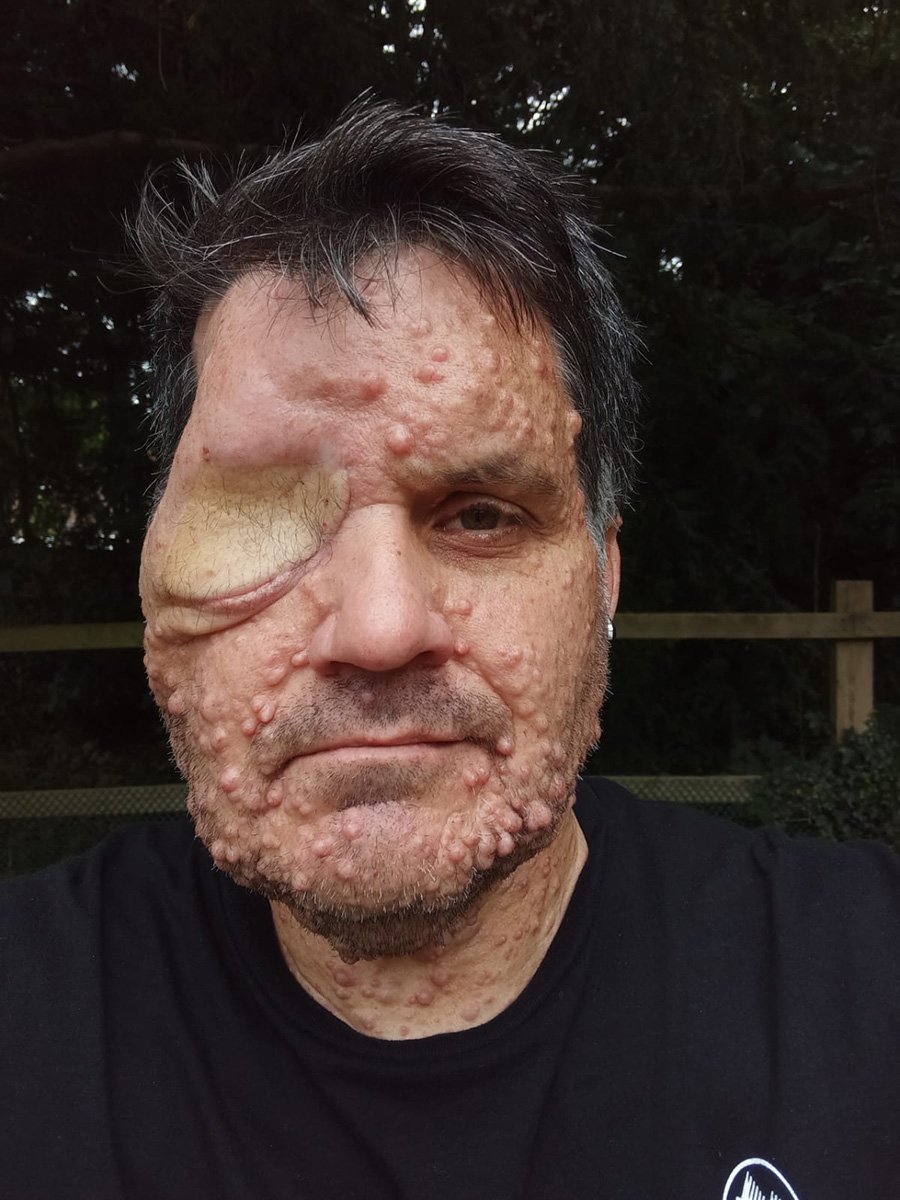
All photographs courtesy of Oliver Bromley unless otherwise stated
“Wake up, make your bed, look in the mirror, know who you are, and carry on. What other people think about us is none of our business.”
Oliver Bromley was born in Cape Town in South Africa in the early 1980’s and was diagnosed with Neurofibromatosis type 1 (NF1) at birth. Around half of those living with NF1 have inherited the condition, and this was the case for Oliver, with both his father and his younger brother sharing the same diagnosis.
Oliver grew up in Johannesburg, in a close knit, supportive and loving family, but still life was not always easy. He reflects how “school was particularly difficult because of how we look; neurofibromatosis presents as little tumours occurring at the nerve endings, which create visible bumps and lumps under the skin. And I also had a large right eye plexiform, which is a big neurofibroma on the right-hand side of my face, which caused some damage and changed the shape of my face.” His parents tried their best to prepare him, and to equip him with a framework of responses to give when others pointed out his differences. “I’d reply by saying things like ‘this is the way I was born’, or ‘this is how God made me.’”
This strong sense of his own worth is one of the most important things Oliver’s family gave him, and to this day he carries the saying that his grandmother shared with him close to his heart, a daily reminder about how to keep carrying on, even when things get hard. “Wake up, make your bed, look in the mirror, know who you are, and carry on. What other people think about us is none of our business.” And yet today Oliver has begun to engage more actively with what other people might think, to use his experiences, his life and his whole self to try to change the narrative. It says a great deal about who Oliver is that this change, this decision to become an advocate not only for himself, but for anyone living with a visible facial difference, came about after a very distressing incident in the summer of 2024.
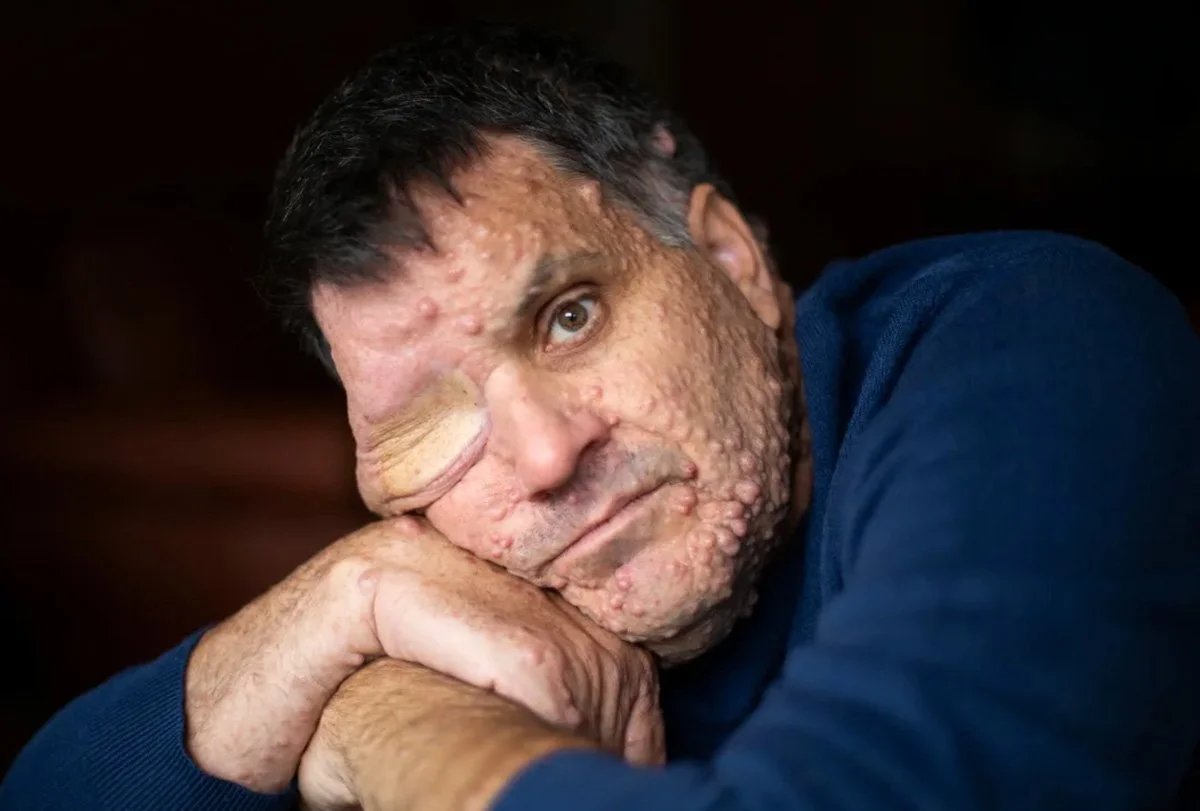
Photograph by Martina Holmberg
It was late August and Oliver was in London, where he was receiving treatment at King's College Hospital as an inpatient. Tired of hospital food he decided to go to a nearby restaurant for a takeaway, on seeing the ‘cash only’ sign he left to go to the nearby cashpoint machine but was within moments ready to order. Devastatingly however, he was told that he was unwelcome, that he was 'scaring the customers', and that there ‘had been complaints’ about him. He left immediately, too shocked and upset to challenge them. His complaint to the restaurant was ignored, and although the police did visit the premises following his report of a hate crime, no further action was taken.
The hospital was appalled and encouraged Oliver to speak out about what had happened, and within days his story was being shared widely across both local and national press. Over the coming months he was invited to be on both TV and radio to speak about his experiences. The fact that he has never named the restaurant, once again speaks to who he is, and the principled man his parents raised him to be. “It helps when you remember that people are acting from a place of ignorance, and that it's not a reflection on me. If people are uninformed, and they're operating from a place of ignorance then you can turn those moments into teaching moments.”
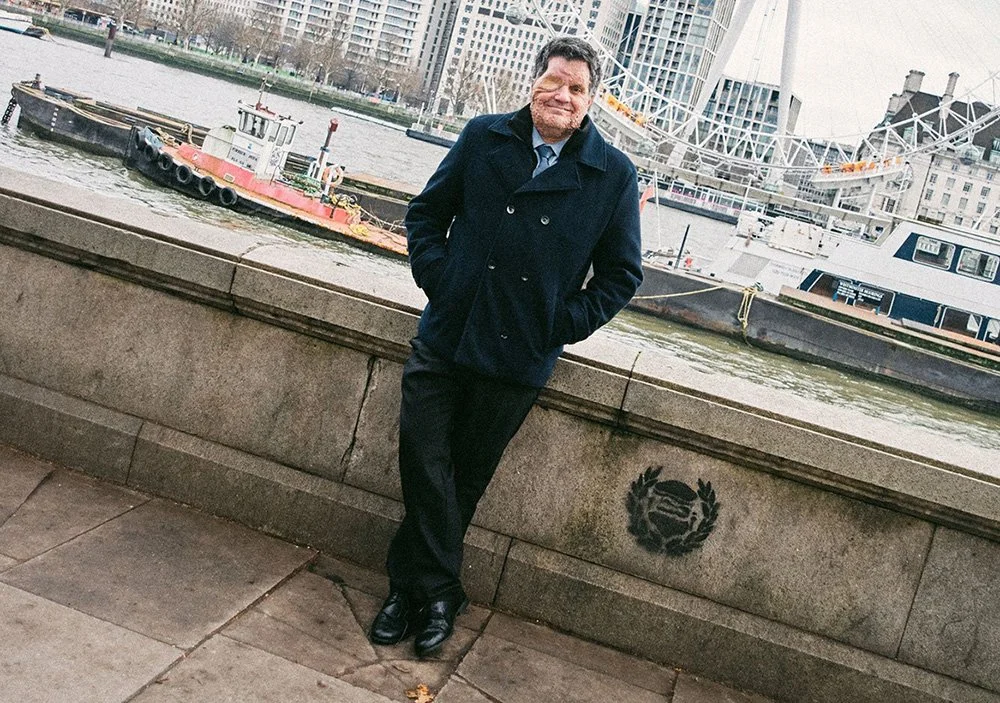
Photograph by Joshua Tarn
Of course, as Oliver notes wryly, you must be in the right place emotionally to choose to meet ignorance with patience and kindness, and there are absolutely days where he is tired, and just wants to be left to his own thoughts. “Of course, we are all only human, and if I've had a hard day then the last thing I feel like when I'm standing in the queue at the supermarket, is being reminded that I look different, and that this warrants some kind of interaction with me. But, more often than not, I realised that I've been able to engage positively, and most of the time I don't mind anymore. Humour can be very disarming, so if someone is staring at my face saying something like ‘is there something wrong with me?’ or ‘do I have something on my face?’ can be a good way to break the moment. Maybe it's a mark of maturity now that I don't react as often as I used to, and that I would rather that we create a discussion and have a conversation so I can talk about neurofibromatosis. That way I can turn those interactions into a positive one, and I find that quite affirming.”
Having begun to speak publicly Oliver was asked to appear on some podcasts, attend conferences and other events as a guest speaker, and he also began to work in collaboration with some national charities, most notably Changing Faces whose mission reflects his own. He also decided with this new platform to engage more broadly through social media, and over the past six months his Instagram following has grown significantly. He is enjoying sharing short, daily inspirational talks, and overall has found it a really powerful way to share his voice. “At this point the online trolls have mostly fallen away, and I don't get as many nasty comments as I used to, although they didn't really bother me. Mostly my interactions are very affirming, and people have really reached out to me, and asked me loads of questions about NF so they can prepare for their own journey. Also, lots of people who have lost or are losing loved ones to illness have mentioned how some of these talks have really touched and encouraged them. So, it's very gratifying. It's very fulfilling.”
Reflecting on the unexpected turn his life has taken over the last year or so, Oliver muses that although it was deeply traumatic at the time, he no longer wishes “to change that incident. I think overall it was good that it happened, and in many ways I’m quite grateful because it's given me a bit of a voice. Or perhaps it helped me to find my voice, and so I don't regret that it happened. But of course, I'm still sad that it happens, because it happens to a lot of people.” This is not to say that the past year has always been easy, indeed he has had to navigate the death of his beloved father, along with some other things, and is currently signed off from work, but here too he feels fortunate, because he works for the NHS running a mental health crisis helpline, and his employers are both understanding and supportive of their team’s mental health.
“I’ve always believed, like my grandmother taught me, that you get up every day and you start again, but I'm absolutely depleted at the moment, both because I've had a couple of hard years of really hard life stuff, and dealing with some delayed grief reaction. In many ways my NF diagnosis has never really bothered me, apart from the surgeries that I had, because I've lived a full life and it's not really stopped me from doing anything, just at the moment, I'm exhausted.”
Embracing the chance to share his journey has given Oliver something positive to build on. “It's given me a bit of a purpose outside of my work, and it’s given me opportunities. Becoming an advocate and being able to contribute to the conversation, to be able to educate and inform people about neurofibromatosis has been really good. Just creating a bit of an awareness in that space is hugely edifying and gratifying, and it's been really good to have something different to do, it's perhaps allowed me to think about what I might do in the future.”


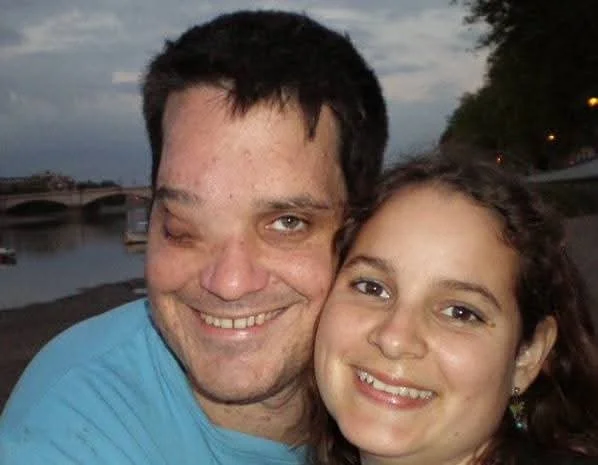
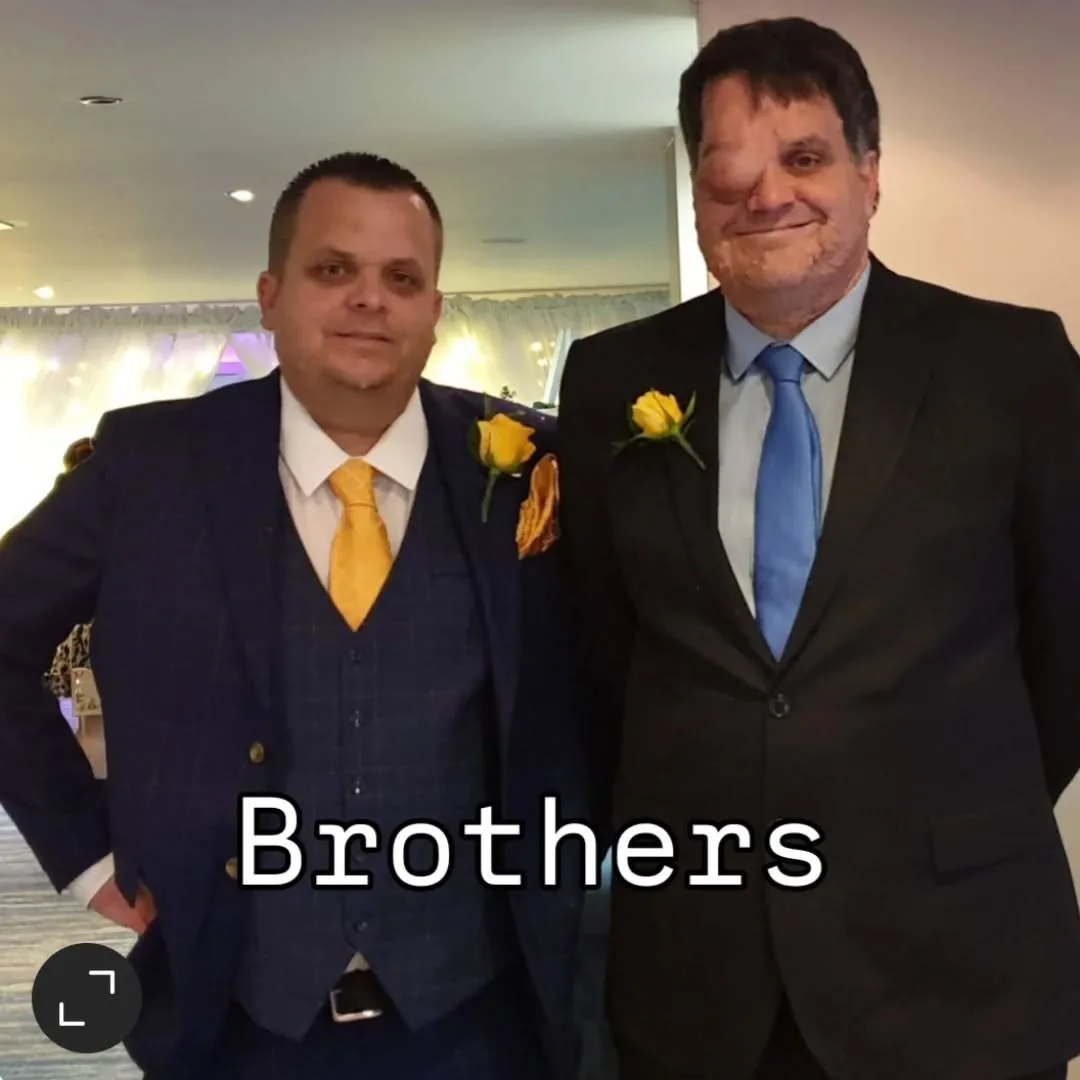
Over time Oliver has worked hard on they key messages that he shares, because as he explains by and large those people who are out there trying to create the change that they want, and need, to see are “just normal people. People who have decided that just because we look different, we're not going to let that continue to define us or stop us.”
“My overarching message that I give every day, and what I always end my videos with is simple. ‘Fill the world with love and be kind.’ If you're a person living with a rare diagnosis realise that people are acting from a place of ignorance, and that it's within your power to change that, and to turn those moments into a teaching moment. Don't take it too personally, because when we know better, we do better. People don't know what they're doing half the time - I don't know what I'm doing half the time. And remember, what other people think about you is not your business, so get over it and move on. Because in the main people won’t have given you a second thought after they've been unkind to you, so don't allow them to rob you of your peace, or to take up too much rent in your head. I say all of this as a person who can say it and has lived it so I do know that it's easy to say, and much, much harder to do. But, just do it, because it'll make your life easier, and it will give you so much peace. Your condition does not have to define you, but it will shape you into the incredible person that you are.”
You can follow Oliver on Instagram here: @bromleyo

FIND OUT MORE
About Rarity Life:
Rarity Life is an online publication that offers those affected by rare disease, disability and cancer the opportunity to create content that is truly inclusive, to unify our collective experience and to celebrate and share our differences.
To read the latest edition and all previous releases of Rarity Life click here.
About Neurofibromatosis:
Neurofibromatosis (NF) is the group name for Neurofibromatosis Type 1 (NF1), NF2-related-Schwannomatosis (NF2) and Schwannomatosis (SWN). NF conditions are rare, autosomal-dominant genetic conditions which are characterised by a number of distinctive features. All of the conditions cause nerve tumours, and although these tumours are usually non-cancerous (benign) they can be internal or external, and they can be big or small. Depending on location and size they can cause no harm, but they can cause complicated medical issues.
What is NF1?
NF1 is one of the most common neuro genetic conditions, despite this it is rare, and currently there are only approximately 25,000 people in the UK diagnosed with NF1.
The main symptoms of NF1 can include:
• tumours which grow on the nerves and skin
• light brown patches of skin (café-au-lait spots) – these may be harder to see on brown and black skin
• eye problems, such as a squint, reduced vision, or a bulging eye - which can sometimes cause further symptoms
Find out more by clicking here.
Changing Faces:
For more information about visible differences visit: