“My parents were quietly told that there was a 75% chance I would die within the first 72 hours, and that if I survived, I would never again be able to interact normally with others, let alone take care of myself.”
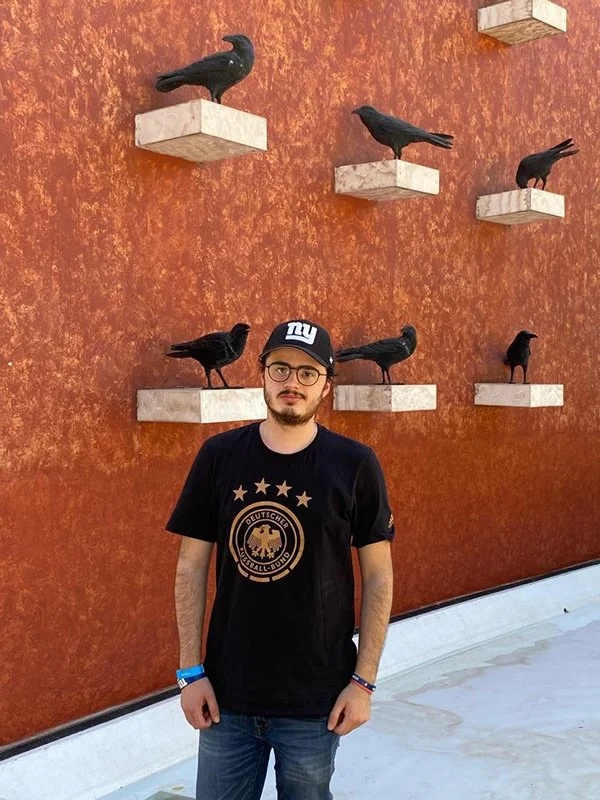
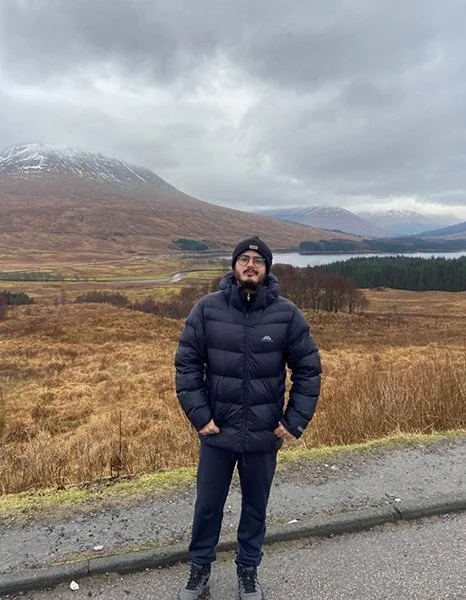
When our call connects Fernando Morales Ramirez is at home in Mexico City, visiting his family for the Easter holidays. He was born in Zapotlan el Grande, in the western Mexican state of Jalisco, but his family moved for his father’s work when he was just a few years old. He is 27 years old, and currently living in Northern Ireland, where he is studying for a Master’s Degree in Accounting and Finance in Belfast. What makes this fact truly remarkable is that when he was just 20 years old his parents had been told to prepare for the worst, after their son had been rushed into hospital, having collapsed at college.
As a child and teen Fernando had been both very sporty, playing competitive football and practicing taekwondo, as well as a brilliant student who had earnt both a prestigious scholarship to study at one of the top colleges in Mexico, as well as a scholarship to study European Commerce in Strasbourg, France. However, in the summer of 2019 and just a few months before he was due to travel to France his life changed in an instant. Taking a deep breath he begins; “I needed to go to the university to collect the final documents for my exchange paperwork. I didn’t go until the afternoon because my mother wasn’t feeling well, and I’d stayed home to look after her. I had tried to take her blood pressure because she was feeling dizzy, as the monitor showed no reading at first, I’d tested it on myself to check it work, the numbers on my blood pressure reading were perfectly normal, it’s ironic how everything had seemed completely fine just hours before the tragedy.
Once I got in my car to head to the university I noticed that the noise of the traffic had begun to fade, I began to feel lightheaded and my vision became slightly blurred. I didn't give it much thought, though; it was barely enough to even be uncomfortable. When I arrived at the school, the dizziness became so overwhelming that I lost my sense of where the floor was, and for the first time in my life, I began to see double. I still cannot explain how I even managed to climb the stairs feeling that way. As I went up, the disconnect from my own body grew. My legs stopped working, and I had no choice but to sit down on a step. Seconds later, my back and arms also stopped responding, and I had to lie down on the stairs as best I could. I would never forget how my consciousness never left me; I managed to call out to a security guard with a broken voice and to phone my parents using my left hand.
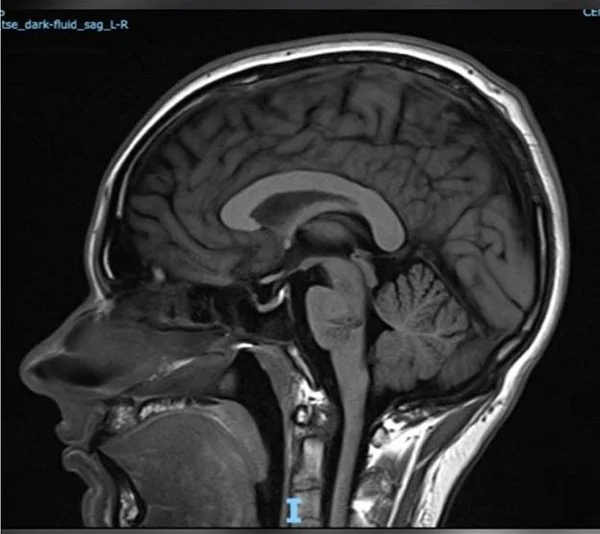
I was rushed to the university doctor by security, his face showed clear concern and unease. Minutes later, my parents arrived and helped me into an ambulance that took me to the nearest hospital. On my way there, I threw up twice. Upon arriving at the nearest hospital, I spent hours lying on a stretcher in the Emergency Room, where many doctors came to see me, each one arriving more confused than the last. I was talking to my parents when suddenly, my right arm began to move abruptly on its own. I didn’t know what was happening, but minutes later, I realised that the hand on the same arm had no sensation. My body couldn’t detect my mother’s hand; as if in a dream, I asked her to pinch me hard, but I felt absolutely nothing. After what felt like endless tests and discussions among the doctors, they approached my parents and told them I had suffered a brainstem haemorrhage caused by a congenital cavernoma. Unaware of the gravity of the situation, I entered intensive care, while my parents were quietly told there was a 75% chance I would die within the first 72 hours, and that if I survived, I would never again be able to interact normally with others, let alone take care of myself.”
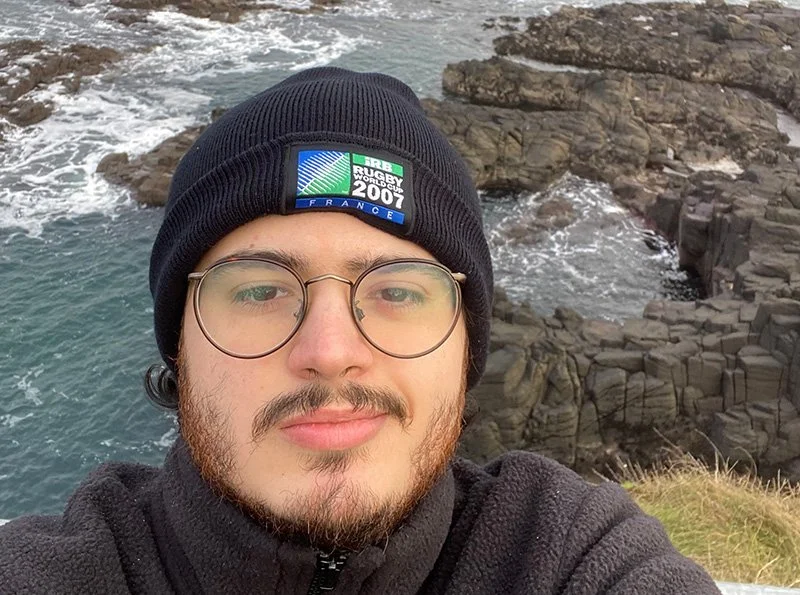
All photographs courtesy of Fernando Morales Ramirez
But Fernando somehow pulled through, and after five days was stable enough to be transferred to a hospital in Mexico City which specialised in neurological rehabilitation. The road to recovery was very long, with the likely outcome largely unknown. But whilst Fernando’s parents had been told that he would likely need a lifetime of care if he recovered, they chose to shield him from this and reassured him throughout that he could and would recover. “It was weird, because the doctors had told my family basically that I was going to die, or that if I survived, I would likely not be able to communicate. But although they told that to my parents that they were very careful with me, so I was not really aware of everything at that time, and was just focused on recovering.”
After spending 76 days in the hospital, Fernando was discharged home to begin the long process of recovery. However, the start of the global pandemic once again shifted the world on its axis, and over the following year and a half he navigated intensive physical, occupational and cognitive therapies without having the opportunity to freely access them due to the restrictions and confines imposed by multiple lockdowns, closed hospitals wards and social distancing. But despite these challenges he recovered incredibly well, left only with some issues with his balance if running or playing sport, and a loss of sensation in his right hand. The medical team had explained to the family that the chances of it happening again were remote, and so Fernando too told himself that although it had been traumatic at the time, “I am okay now. Nothing truly bad happened, and nothing bad will happen.”
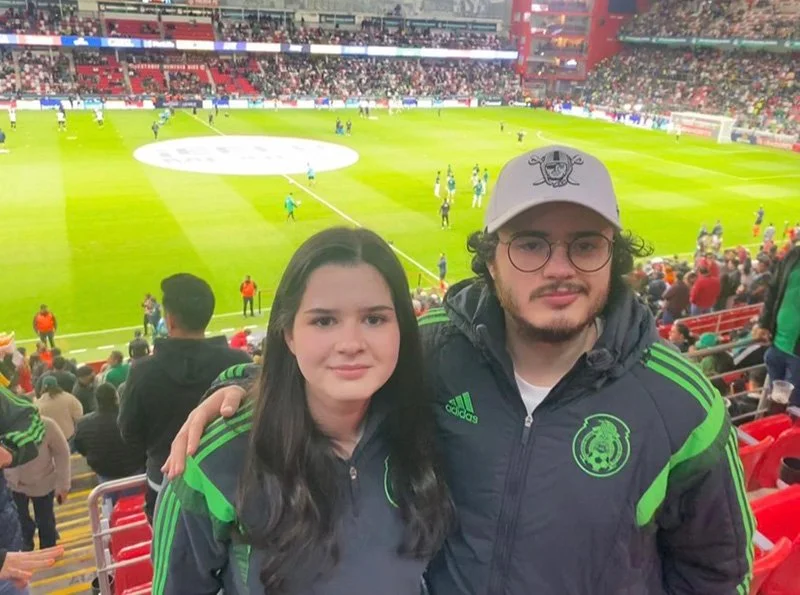
Fernando takes a deep breath, and it’s clear he is deciding how, or if to continue. “When I was in hospital I received basic mental health support, essentially one hour a week of therapy in my room to just to talk. But at that time, I felt OK, the struggle was not in my head, and I was so focussed on recovering physically that I didn’t feel I needed support.” However, he explains that about two years later, he was unexpectedly advised by a doctor during a consultation that he required brain surgery to completely remove the cavernoma. The procedure carried a 50% risk of severe brain inflammation, which could lead to fatal or grave long-term complications, and from that point, everything changed. “When I heard that I needed a brain surgery, in that moment my mental health was hit hard. After that it just declined.” Although a second opinion determined that the surgery was not necessary the damage was done, and Fernando began to struggle with the enormity of what had happened to him, and with the fear of what might happen in the future.
“Mentally it was really difficult, it was no longer my physical health anymore but my mental health. For around six months I was hyper focusing on every single breath I took, every time I breathed in, I was focusing on it and I was not able to focus on anything else. It was a really bad time for me, I became really sick in a way because I was just concentrating on the fact that I was breathing, but I was not doing anything else, I’d just sit there every day, I even stopped going to college. I was alive, yes, but just so afraid of death in that six months, like all the shock that I should have experienced when I had the cavernoma was hitting me at once. In the hospital I had felt as though nothing truly bad had happened to me, and I just worked hard on my therapies, on recovering, on moving on. But then it was as if it all crashed in on me like a storm for those six months, and it was horrible for me and my family.”
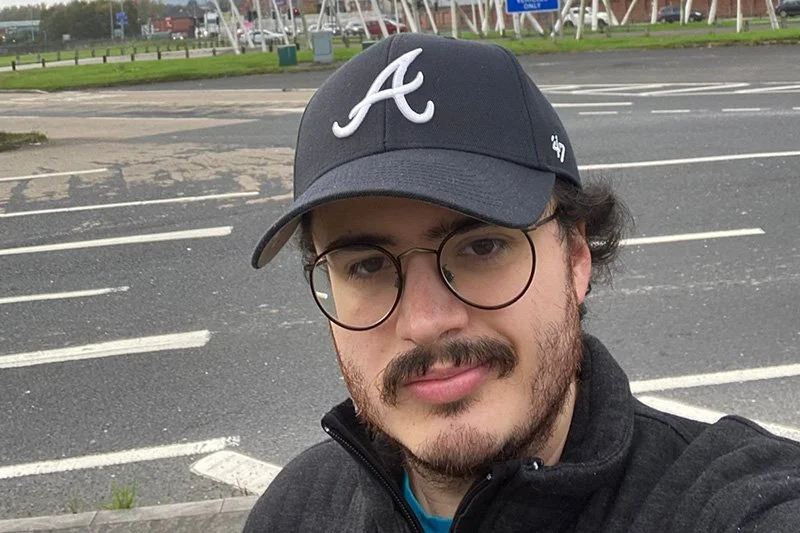
With the help of his family Fernando began therapy, he was prescribed antidepressants, and he began to try to work through the trauma of what had happened to him, and his fears about the future. Gradually things improved, and he was able to return to his studies, and to focus once again on his future hopes and plans. But even then, although he talked to his family, he still felt unable to be open about his mental health struggles. “When I talked to people about it I only told them the physical part, really just the tip of the iceberg. I would explain that I was in the hospital 75 days for the cavernoma, and about the physical therapies and recovery I had gone through but I did not tell anybody the mental health part. But now, I want to. When I talk about having a cavernoma I want to talk about mental health too. Maybe it is also part of the rebuilding of my own mental health, but I want to talk about it. I want people to know that we are mentally vulnerable, so that maybe they don't feel afraid of speaking up if they are struggling.”
It is this that makes the life Fernando is living today so remarkable, that despite having had to work so hard to rebuild and recover first his physical, and then his mental health over so many years he is now an international student living in Belfast, thousands of miles away from his family and support networks. “Being here can feel challenging, and a little lonely, especially not being around my family, because they have really been protective of me since everything happened. But, it is also making me feel more independent and more brave at the same time. It’s important because before I felt like the future was promised. When I was young, I thought that the future was just like guaranteed for me, but now I know that it's not guaranteed. So, I'm trying to take more risky steps, to do more things because now I feel like I have a clock ticking, and that every second counts.”
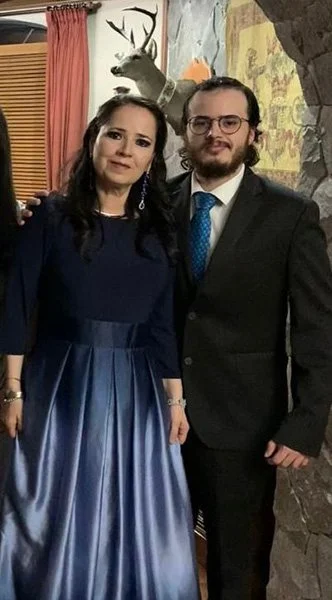
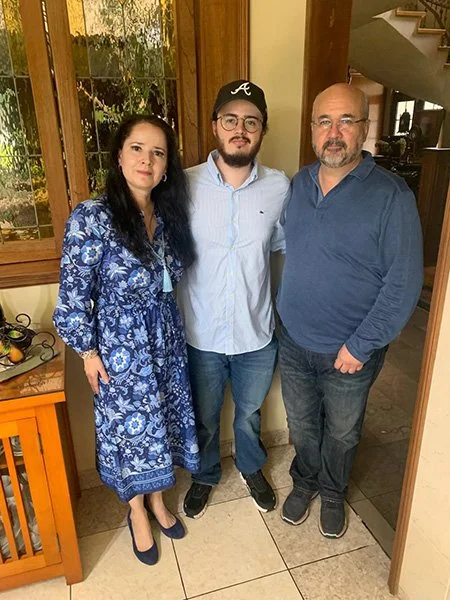
Fernando had always had big dreams and had spent his teen years studying incredibly hard to achieve them. But, just as he was on the cusp of an exciting new chapter studying abroad first the cavernoma, and then the global pandemic, brought his dreams to a crashing halt. Today though, he explains, he feels strongly that everything happens for a reason. “I believe in God, and think this all happened for a reason. That maybe I was not enjoying my life as much as I'm enjoying it now. So, it was almost like a really tough lesson from God to do things differently. To not be so attached to studying, studying, studying, but to also do the things that I enjoy. To enjoy more time with your family, enjoy your friends, to live fully, which was maybe not something that I was doing previously.”

FIND OUT MORE
About Rarity Life:
Rarity Life is an online publication that offers those affected by rare disease, disability and cancer the opportunity to create content that is truly inclusive, to unify our collective experience and to celebrate and share our differences.
To read the latest edition and all previous releases of Rarity Life click here.
About Cavernomas & Cavernoma Alliance UK:
A cavernoma, also referred to as a cavernous malformation, cavernous haemangioma, or cavernous angioma, is an abnormal cluster of small, irregular blood vessels, and are located in the brain or spinal cord. They are often described as looking like a raspberry, or small mulberry. The cavernoma typically has very thin walls which makes them susceptible to bleeding, as such they can be dangerous. If they bleed this can cause neurological symptoms such as, seizures, stroke-like symptoms, and even paralysis. Some people with cavernomas might never experience symptoms, or know that they have one, but others may develop neurological problems, the severity of which largely depends on the location and severity of bleeding.
A diagnosis is typically made after the person experiences some neurological dysfunction, using MRI scans. The treatment and/or management options might include observation, medications to manage symptoms, or surgical removal in severe cases.
To find out more about Cavernoma Alliance UK visit them here.